

AI4 Society Seminar | Baobao Zhang
Abstract: Sentiment toward artificial intelligence (AI) has grown increasingly sour among the American public, with half indicating that they are more concerned than excited about the increasing use of AI in everyday life. However, existing scholarship has found only weak links between technological exposure at work and political preferences. What explains this disconnect? Based on evidence from a two-wave nationally representative survey of U.S. workers and a deliberative democracy workshop, we argue that American workers’ political response to AI depends on how much power they have to shape its deployment and their lived experience with AI at work. Extant research has missed this dynamic because it focuses on tasks and occupations uncoupled from the workplaces in which these jobs are situated. We shift the unit of analysis to the workplace, treating it as a political site in which power is unequally allocated and where the distributive consequences of technology are determined. Crucially, we frame the work politics of AI not as a referendum on the technology but a referendum on who controls it.
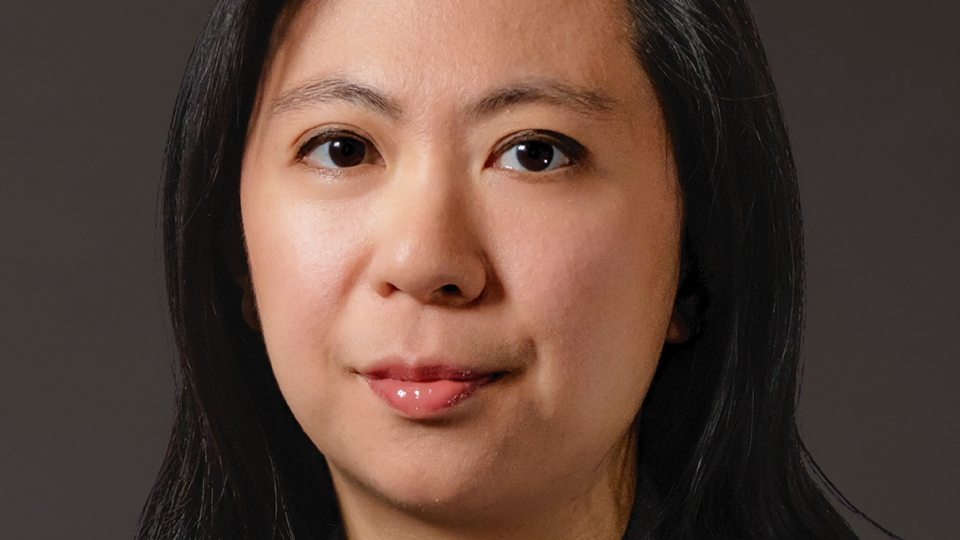
I am the Maxwell Dean Associate Professor of the Politics of AI in the Political Science Department at the Maxwell School of Citizenship and Public Affairs, Syracuse University. I am a research affiliate with the Centre for the Governance of AI.My current research, funded by the National Science Foundation, focuses on trust in digital technology and the governance of artificial intelligence (AI). I study (1) public and elite opinion toward AI and (2) how workers, employers, and governments could adapt to the increasing automation of labor. My previous research covered a wide range of topics, including the politics of the U.S. welfare state, attitudes towards climate change, and survey methodology.I graduated with a PhD in political science (2020) and an MA in statistics (2015) from Yale University. In 2020-2021, I worked as a Klarman Postdoctoral Fellow in the Cornell Society of Fellows. In 2019-2020, I worked as a postdoctoral fellow in MIT’s Political Science Department and a fellow at the Berkman Klein Center for Internet and Society at Harvard University. During my time as an assistant professor, I was a CIFAR Azrieli Global Scholar in the Innovation, Equity & The Future of Prosperity Program and a Schmidt Futures AI2050 Early Career Fellow.


Stay up-to-date with the LIDS Latest newsletter


Massachusetts Institute of Technology
Room 32-D608
77 Massachusetts Avenue
Cambridge, MA 02139

