

LIDS Seminar | Vianney Perchet
Algorithms increasingly take as input the output of another model: a forecast, a draft, a candidate solution. Learning-augmented algorithms make this rigorous. They use an untrusted prediction to be near-optimal when it is accurate (consistency), without being much worse than ignoring it when it is not (robustness). Much of the literature seeks Pareto-optimal tradeoffs between these two goals. Such algorithms can be brittle: an arbitrarily small prediction error can wipe out all the benefit of the prediction. This talk is about the third requirement, smoothness - performance that degrades gracefully with the error - and about what it costs.
First-price auctions, where underbidding by a cent loses the auction, are the main example. In a single auction, smoothness must be paid for in consistency, at an optimal rate that we characterize. In repeated auctions, feedback lets the bidder keep exact consistency and pay in robustness instead, only by an additive constant. In one-max search, by contrast, smoothness comes for free, together with average-case guarantees.
Based on joint work with Salam Afiouni, Ziyad Benomar, Lorenzo Croissant and Spyros Angelopoulos.
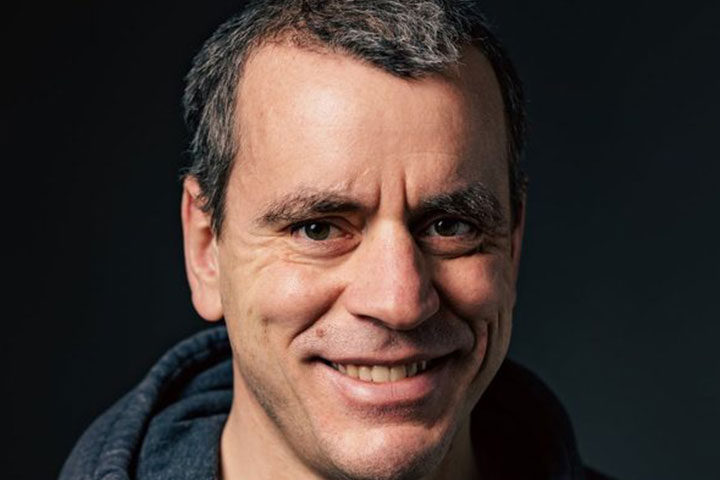
My research sits at the interface of machine learning and game theory, at the junction of mathematics, computer science and economics. It ranges from pure theory - optimal rates of convergence of sequential learning algorithms - to concrete applications such as recommender systems, online advertising auctions and the design of transparent and fair marketplaces.
I have been a professor at CREST (Centre de recherche en économie et statistique) at ENSAE Paris since 2019, and a part-time distinguished researcher at the Criteo AI Lab since 2017. Together with Patrick Loiseau, I co-lead FairPlay, the joint Criteo–Inria–Institut Polytechnique de Paris team studying the impact of AI on the design of transparent and fair marketplaces. Before joining ENSAE, I was a professor and head of the mathematics department at ENS Paris-Saclay (CMLA, now Centre Borelli, 2016–2019), and before that assistant professor at Université Paris Diderot (LPMA, 2011–2015).


Stay up-to-date with the LIDS Latest newsletter


Massachusetts Institute of Technology
Room 32-D608
77 Massachusetts Avenue
Cambridge, MA 02139

